

Moving to Bali: an honest, practical guide
Updated June 2026 · By Karina, Wonderful Bali Villas long-stay team — placing long-stay tenants across Bali since 2018
Moving to Bali is one of those decisions that feels enormous from a distance and, done in the right order, turns out to be a series of manageable steps. We help people make the move every week, so we see what actually trips them up — and it’s rarely the flight. This guide walks through the real decisions in sequence: your visa, where to live, what it honestly costs, finding a home, and moving with kids — with a link to the detailed guide for each.
Who moves to Bali — and is it for you?
People move to Bali for very different reasons, and the ones who thrive tend to know which kind they are before they arrive. Remote workers and founders come for the cost-to-lifestyle ratio and the ready-made community. Families come for international schools and a childhood spent outdoors. Retirees come for the climate, the calm and affordable help at home. And a lot of people come for a planned year that quietly turns into several.
It suits you if you can work with island infrastructure (good, not flawless), enjoy a slower pace, and are happy building a life around a scooter and a warm but bureaucratic system. It suits you less if you need fast, predictable everything, or expect a two-week holiday to feel the same as a Tuesday in month five. The single biggest mistake is choosing Bali — and choosing where in Bali — from a great holiday rather than from honest daily life.
The big decisions, in order
Moving here is really five decisions, and the order matters. Get them roughly in this sequence and the rest falls into place:
- Your visa — the legal right to stay for the length you want.
- Where to live — the area that fits your actual daily life, not the postcard.
- Your budget — an honest monthly number for the life you’ll really live.
- Somewhere to live — finding and leasing the villa or apartment.
- Schools — if you’re moving with children, this one actually comes first and decides the area.
The rest of this guide takes them one at a time, and points you to the detailed guide for each.
Your visa: the right to stay
Your visa and your housing are separate things — a lease doesn’t give you the right to live in Indonesia, the visa does. Which one you need depends on your nationality and how long you’re staying. In broad terms: a visit visa covers shorter stretches, while a KITAS (a limited-stay permit) — including the E33G remote-worker visa for people earning from outside Indonesia — covers a year or more and is renewable.
You can handle the paperwork yourself through Indonesia’s official immigration portal (evisa.imigrasi.go.id), or use a licensed agent — the more comfortable route, especially when several people are moving together. Either way, rules change often and the details depend on your situation, so treat this as orientation, not advice, and confirm your route before you commit to flights. A dedicated Bali visa guide is on the way to cover the current options and what they cost.
Where to live
There’s no single best place to live in Bali — there’s the area that fits how you’ll actually spend your days. Canggu and Pererenan for café and coworking life; Umalas for a quiet, family-friendly base near the scene; Sanur for calm, walkable, family living on the east coast; Ubud for jungle and a slower pace; Uluwatu for clifftops and surf. Each comes with real trade-offs around traffic, beach access and how built-up it feels.
Our where to live in Bali guide walks through every area honestly — who each suits, the catch nobody mentions, and the best areas for families with kids.
What it costs
The honest answer is that it depends entirely on how you live — so instead of one number, here are realistic 2026 monthly ranges for a private-pool villa:
| Who | IDR / month | USD / month |
|---|---|---|
| Solo — pool villa | 26–45M | 1,500–2,550 |
| Couple — shared pool villa | 42–62M | 2,400–3,500 |
| Family of four — 3BR + 2 kids in school | 100–160M | 5,500–9,000+ |
Drop the private pool — a simple villa or apartment — and a solo budget falls toward IDR 16–20M. For families, international school fees are the line that dominates everything else. The full breakdown — three itemised budgets, every major cost, and a cheaper-vs-pricier area comparison — is in our cost of living in Bali guide, and rent specifically is in the monthly villa rental cost guide.
Finding somewhere to live
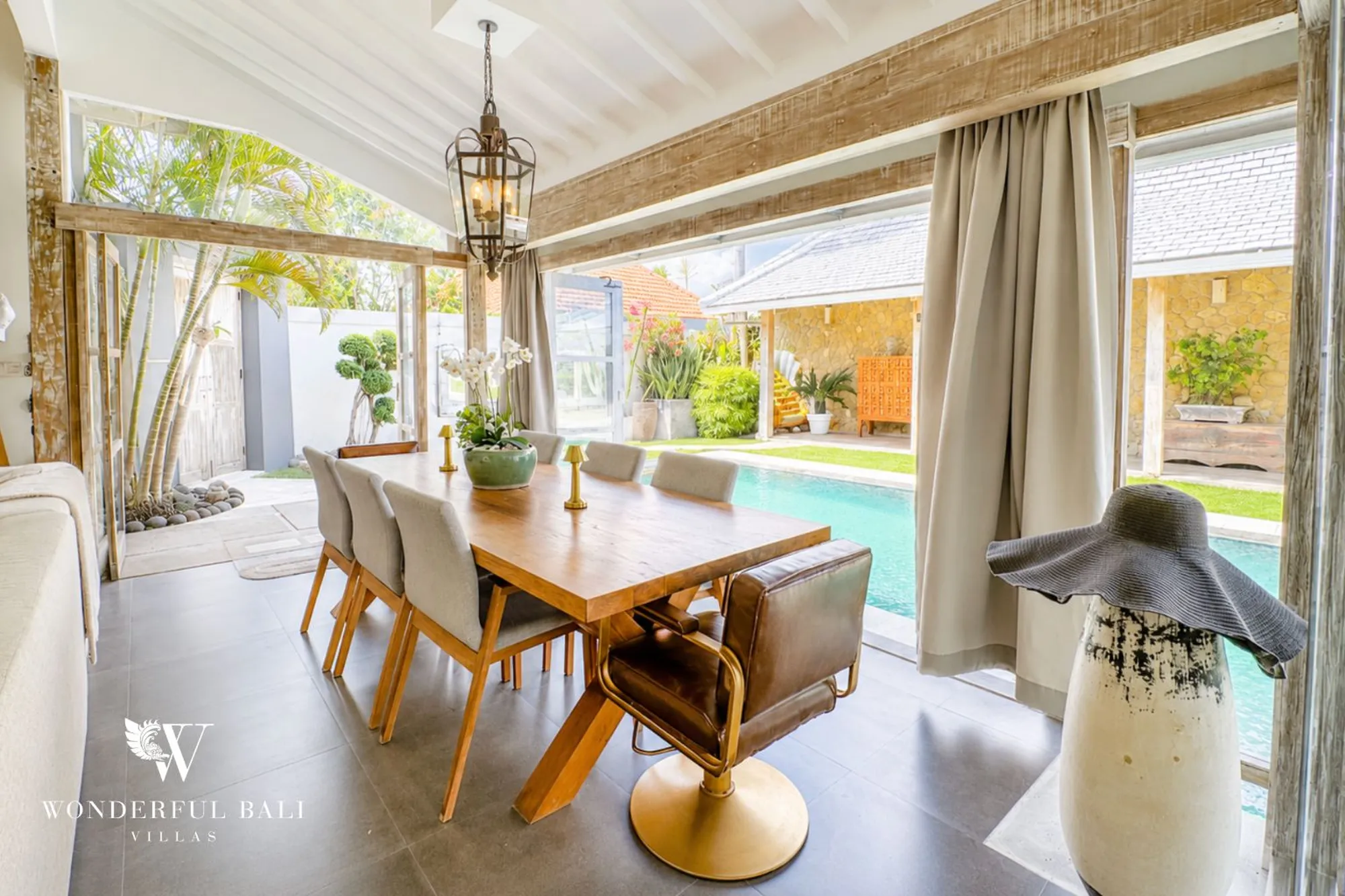
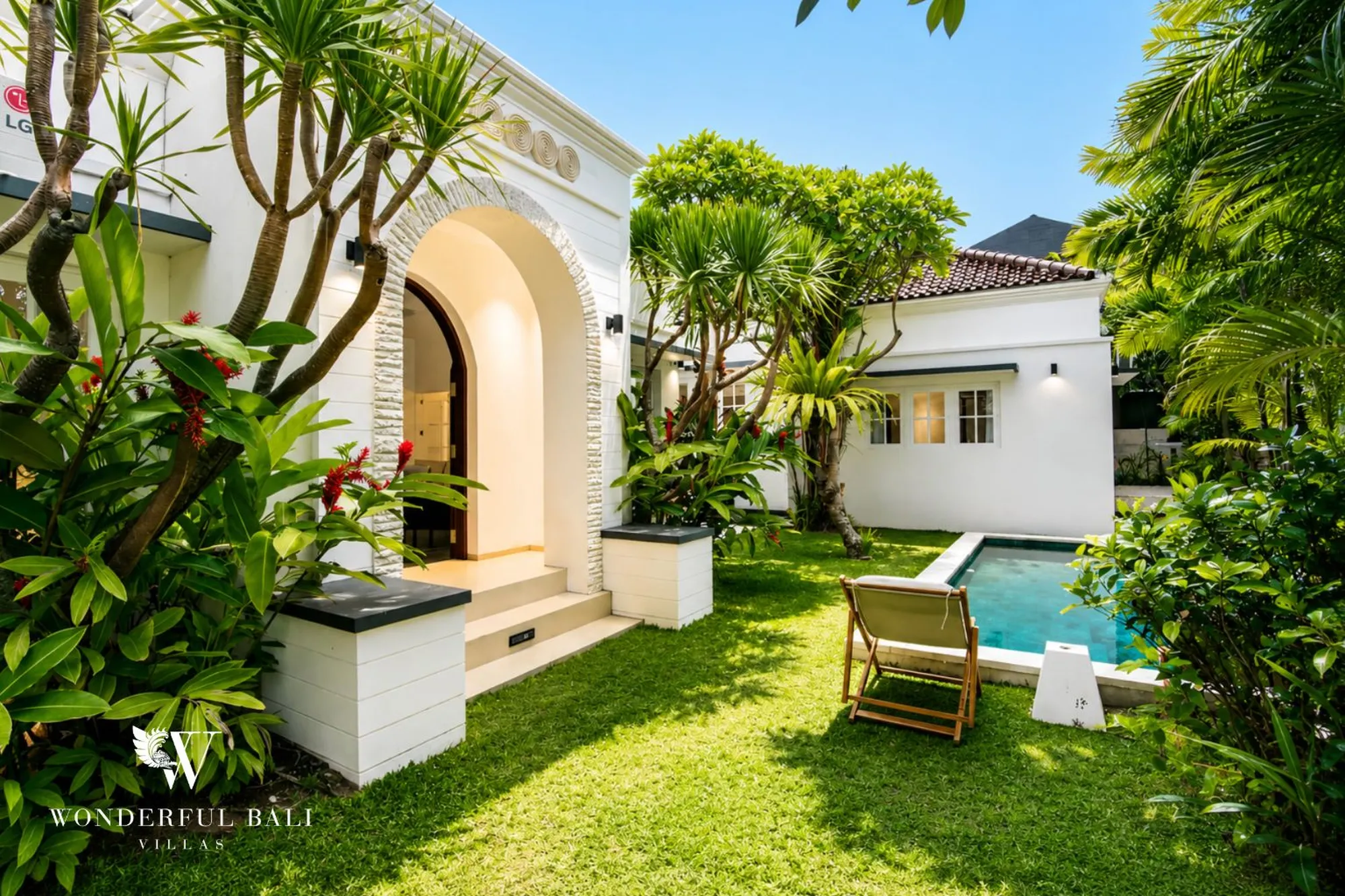
Most long-stayers rent a furnished private-pool villa on a monthly or yearly lease. Yearly is cheaper per month but usually paid in full up front; monthly costs more and keeps you flexible. Wherever you look — an agency, the Facebook groups, or driving around for “for rent” signs — verify everything, insist on a written contract in Indonesian with an English version, and never pay before you’ve seen a signed lease.
Good long-term villas can go quickly — the best ones, at the best prices, don’t sit around — so it helps to decide how you’ll approach the search. There are two sensible ways to do it.
Shortlist, then come and view. The most efficient route for most people: build a shortlist from home, then fly over for a week or two and view those villas in person. A short trip is usually enough to see the shortlist, get a feel for the area and choose — without committing to a long lease sight-unseen.
Sort it from overseas. If you can’t travel first, build the shortlist and have each villa checked properly — a video walk-through works well — making sure the AC, water, WiFi and everything else actually work. When you find the one that fits, secure it with a deposit and a signed contract so it’s ready when you land. That’s simply how you hold a good villa, since no one keeps it off the market while you decide.
Our guide to renting a villa long-term covers leases, deposits, what to check before you sign and the common scams. When you’re ready to look, browse our long-term villas or just tell us what you need.
Moving with kids: schools
If you’re moving as a family, the order flips: you pick the school first, then live near it, because Bali traffic makes a long school run miserable. That puts most expat families in one of three clusters — the Canggu area (Canggu Community School and others, with many families basing in Umalas), Sanur (Bali Island School), and Ubud (Green School).
Budget honestly: all-in — tuition plus registration, uniforms, transport and lunch — international schooling runs roughly USD 8,000–28,000 per child per year, and most schools want applications 6–9 months ahead. Our guide to international schools in Bali covers fees, curriculum and enrolment, school by school; in the meantime, the where to live guide covers how families choose an area around the campus.
Healthcare and insurance
Don’t skip this line. Routine care in Bali is cheap and good private clinics are easy to reach, but a serious illness or accident means a private hospital or evacuation to Singapore — costs that can run to hundreds of millions of rupiah if you’re uninsured. Options range from BPJS, the national scheme stay-permit holders are generally required to join (IDR 42,000–150,000/month), through nomad insurance such as SafetyWing or Genki (around IDR 700,000–1.5M+/month, covering emergencies and evacuation), to full international cover (from roughly IDR 3M/month for one adult). Scooter accidents are the most common way a Bali budget blows up — make sure your policy actually covers motorbikes.
A sensible first-move timeline
A realistic sequence for a smooth landing — adjust the housing step to whichever of the two approaches above fits you:
- 3–6 months out: sort your visa route — you can apply yourself via the official portal (evisa.imigrasi.go.id) or use a licensed agent, the more comfortable option especially for families or groups. If you have kids, start school applications now.
- 2–3 months out: decide your area and rough budget, and start a villa shortlist — the best long-stay places go early, especially for the July–August and December–January peaks.
- 1 month out: sort health insurance and an airport pickup, and book a week or two to come and view your shortlist — or set up video walk-throughs if you’re securing a place from overseas.
- First week or two on the ground: see your shortlist in person, check everything works, and when you find the right villa sign a lease (written, in IDR, with a receipt). Then get a local SIM and sort a scooter or settle into Grab/Gojek.
Take it in that order and the move feels like a series of small, manageable steps rather than one overwhelming leap.
How we can help you land
We’re Wonderful Bali Villas — a hands-on, local long-stay team that places tenants across the island every week. We don’t add markup; owners pay our fee, so the rent you’re quoted is the rent you pay.
Tell us your area, dates, budget and who’s coming, and we’ll send a shortlist of long-term villas that genuinely fit — and tell you honestly what each one costs to actually live in.
Next steps
 Browse long-term rentalsYearly-lease villas across the island.
 Cost of living in BaliWhat life actually costs each month.
 Retire in BaliVisa, costs and the best areas.
 Where to live in BaliAn honest area-by-area guide.
Prefer to talk? Message us on WhatsApp →
Common questions about moving to Bali
01How hard is it to move to Bali?
Easier than most people expect, if you take it in order: sort your visa, pick an area that fits your daily life, set an honest budget, then find a place to live. The hardest parts are usually the visa paperwork (worth using a licensed agent for) and choosing the right area — not the move itself.
02How much money do you need to move to Bali?
For a comfortable solo life in a private-pool villa, budget roughly IDR 26–45M a month (about USD 1,500–2,550); without a pool it can drop toward IDR 16–20M. A couple sharing lands around IDR 42–62M, and a family of four with two children in international school should budget IDR 100–160M. On top, allow for your flights, a deposit, and the first lease payment. See the cost of living guide for the full breakdown.
03Can you move to Bali permanently?
You can live in Bali long-term on renewable stay permits (a KITAS), and many people stay for years, but “permanent” residency and land ownership are restricted for foreigners. Most long-stayers renew a limited-stay visa and lease their home rather than buy. Confirm your specific route with a licensed visa agent.
04Do you need a visa to live in Bali?
Yes. A villa lease doesn’t give you the right to live in Indonesia — a visa does. Short stays use a visit visa; a year or more usually means a KITAS, including the E33G remote-worker visa for people earning from outside Indonesia. Check your route with a licensed agent before booking flights.
05Is it expensive to live in Bali?
For a comparable lifestyle, Bali typically costs well under half what the same life costs in Western Europe, Australia or the US — mostly through cheaper rent, food, transport and household help. The lines where the gap narrows are imported goods and international school fees.
06Can you move to Bali with kids?
Yes, and Bali has a large expat-family community. The key is to choose the international school first and then live near it — most families cluster around the Canggu-area schools, Bali Island School in Sanur, or Green School near Ubud. Budget roughly USD 8,000–28,000 per child per year all-in, and apply 6–9 months ahead.
07How do you find somewhere to live in Bali?
Two common approaches: build a shortlist and come over for a week or two to view them in person, or — if you can’t travel first — have your shortlist checked by video walk-through and secure the right one before you arrive. Either way, most long-stayers rent a furnished pool villa through an agency, the Facebook rental groups, or by asking around an area they like. Verify everything, insist on a written contract in Indonesian with an English version, and never pay before you’ve seen a signed lease. Our guide to renting long-term covers the whole process.
08Is Bali a good place to live?
For the right person, yes — warm climate, low cost of living, a strong international community and an outdoor lifestyle. It works best if you’re comfortable with island infrastructure, a slower pace and getting around by scooter, and if you choose your area for everyday life rather than for a holiday.