
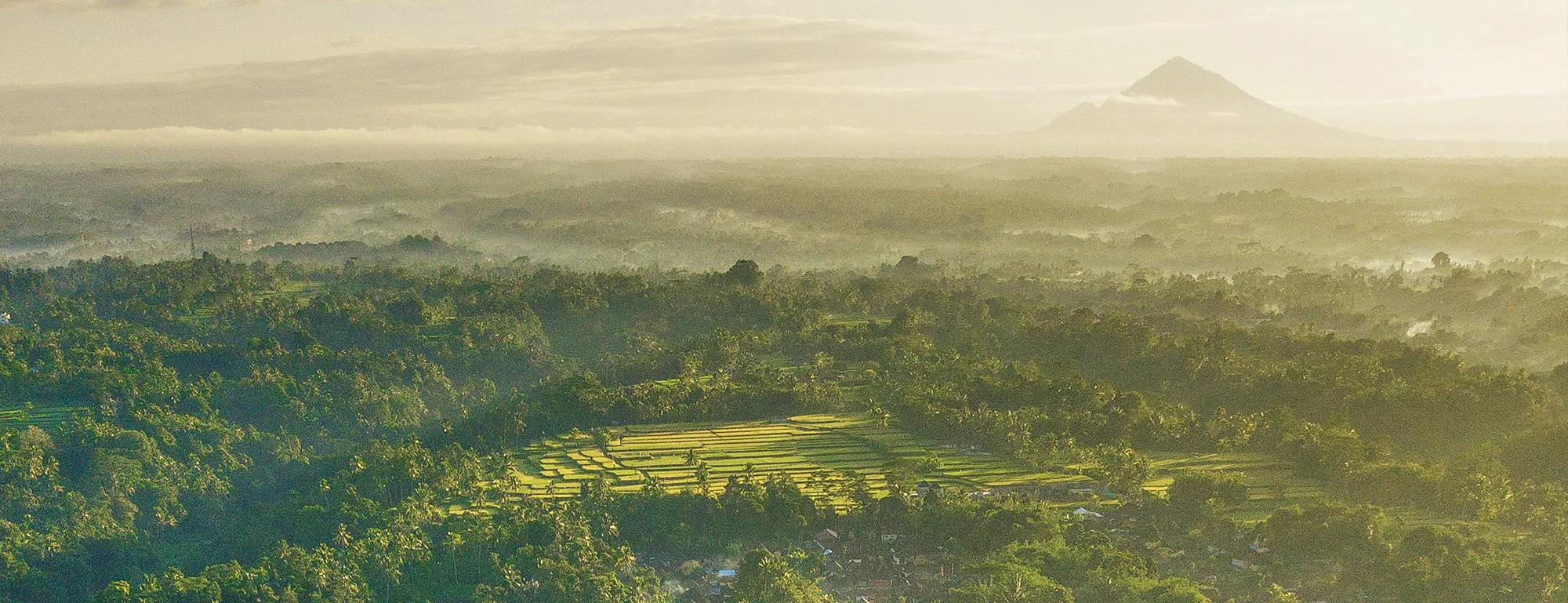
Ubud villas, Bali
A direct guide to Bali's inland heart — rice fields, yoga, slow mornings. What it's like and who it suits.
Our villas in Ubud.
We personally inspect every villa we list. Only a select few make the cut — for their design, location and the way they make you feel in Bali.
Handpicked by locals
We know every corner of Ubud
Best price, guaranteed
Direct rates, no hidden fees or extra charges
Local concierge
24/7 support before, during and after your stay
 Hotel service
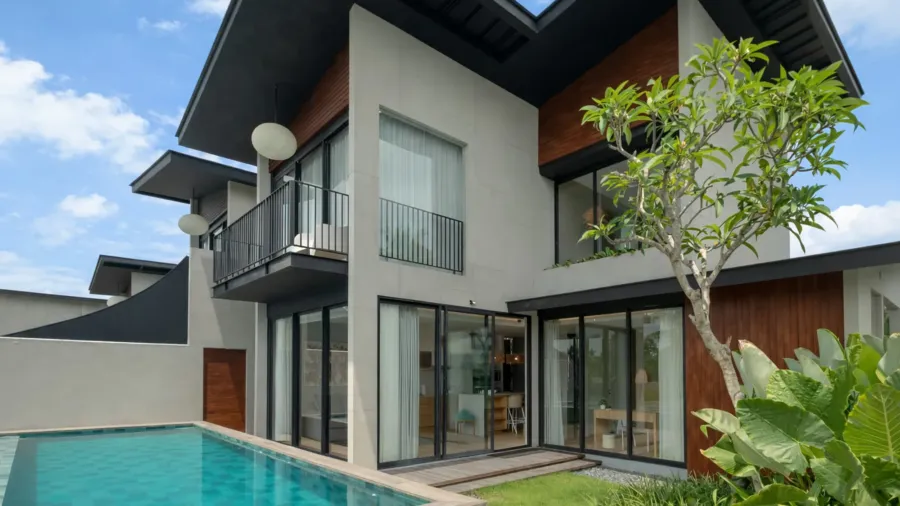
Villa Umahan
A private two-bedroom pool villa inside the Umahan Ubud complex. You get the privacy of your own villa – fully separate, with its own pool, kitchen, and entrance, plus 24-hour reception and daily housekeeping. Modern…
Not sure which villa is right for you?
Browse every Ubud villa we list — or tell us what matters (bedrooms, budget, walk-to-beach) and we'll match you to the right place, no pressure.
Why stay in Ubud.
Ubud is the inland heart of Bali — rice fields, jungle, ridge-top villas, and the closest the island gets to a wellness town. It sits roughly an hour north of the airport, surrounded by gamelan music and forest rather than scooters and surf. Where Canggu is laptops and cafés, Ubud is yoga and slow mornings. The pace is genuinely different: dinner is at 7pm, the streets quieten by 10pm, and most people are up before 8am for a class or a walk in the rice fields. There is no beach. The closest one is Sanur, an hour away in a car.
A typical day looks like this: a yoga or pilates class somewhere central, breakfast on a terrace overlooking the jungle, a morning walk on one of the rice-paddy paths (the Campuhan Ridge Walk is the classic), an hour or two of pool time, an afternoon spa or massage, dinner at a candle-lit restaurant in town. Most things in Ubud move within a 10-minute drive of the centre — the actual town is small. The traffic into and out of central Ubud, however, can be slow at peak hours, especially on the road in from Tegalalang or Penestanan.
Within Ubud, where you stay matters more than in most of Bali. Central Ubud (Jl. Hanoman, Jl. Monkey Forest) is walking distance to restaurants, yoga studios and the Monkey Forest, but it's also the busiest pocket. Penestanan sits ten minutes west — quieter, walkable to the centre via a path through the rice fields, the artist-and-yoga heartland. Sayan sits on a ridge above the Ayung river about 15 minutes from town — properly remote, jungle-canopy views, the most photographed villas in Ubud. Tegalalang and the rice-terrace area is 15–20 minutes north — quietest, best for longer stays, requires a driver for everything.
Ubud has been Bali's wellness centre for over two decades, and it shows in how serious the practitioners are — proper yoga teachers, long-running healers, retreat centres that have run for thirty years. The town has changed (more visitors, a few too many influencer cafés in the centre) but the core has held. We've personally visited every villa we list, so we can usually tell you which pocket actually suits your trip before you book — quiet ridge for honeymoons, walkable centre for first-timers, longer drives for monthly stays. If you want a coastal counterpart with surf and beach, Canggu is roughly 90 minutes south. If you want cliff-top sunsets and dramatic landscape, Uluwatu is on the southern peninsula. Ubud is also one of our most popular areas for monthly stays — many guests come for two weeks and extend; see our long-term rentals if that's on the cards. Browse our villas in Ubud to see what's available — Villa Umahan is our private two-bedroom pool villa a few minutes east of the centre. Staying longer? Ubud is the most affordable of the main areas for a monthly stay — a two-bedroom runs IDR 20–55M a month, a three-bedroom IDR 35–70M (see what a Bali villa costs monthly). Our own one-bedroom rice-field loft and the full list are on the long-term rentals page.
Ubud is what happens when Bali turns the volume off.
Where to eat & drink.
-
Breakfast / café
Yellow Flower Cafe (Penestanan)
A long-running breakfast and brunch spot on the Penestanan ridge — open-air pavilion, jungle and rice-paddy views, proper coffee, healthy menu without going full preachy-vegan. Small kitchen, so service can be slow at peak; the view earns it. Walk up the steps from Jl. Raya Sanggingan.
-
Dinner / fine dining
Locavore NXT (Lodtunduh)
The most-awarded restaurant on the island, now in a purpose-built home 15 minutes south of the centre (the original Jl. Dewi Sita room closed). Modern Indonesian tasting menu built on fermented and locally-sourced ingredients. Books out weeks ahead — message before you fly. Its central sister, Nusantara by Locavore, does traditional Indonesian sharing plates and is far easier to get into.
-
Wellness café
Sage Cafe (Penestanan)
Long-running plant-based café on the Penestanan path — generous bowls, good coffee, reliable wifi. The kind of place you go for breakfast and stay until lunch.
-
Local
Warung Biah Biah (Central Ubud)
A long-running family-run warung on Jl. Goutama in the heart of Ubud. Traditional Balinese — sayur urab, bebek goreng, satay lilit — served on banana leaf. Sit-down room, candle-lit at night, no booking. Cheap by Ubud standards and reliably good; cash works best.
-
Sunset / drinks
Bridges Bali (Campuhan)
Multi-level restaurant and cocktail bar built into the Campuhan gorge — the closest thing Ubud has to a sundowner spot. The view down to the river through the jungle is the draw; the wine list is genuinely good. Best for a drink at golden hour before dinner elsewhere.
-
Late / casual
Naughty Nuri's (Sanggingan)
The grilled-rib institution. Plastic chairs, smoke from the grill, dirty martinis in the wrong glass, and pork ribs that have kept this place full for over thirty years. The Ubud original is the real one (avoid the franchised offshoots elsewhere on the island). Cash works, card sometimes does, no booking.
What to do here.
-
01
Class at the Yoga Barn
From IDR 200,000The Ubud yoga institution — multiple studios on a jungle compound, classes from sunrise to evening, all levels. Drop-ins welcome but popular classes (Vinyasa, Yin, sound healing) fill up; book the day before online. Even if you don't normally practise, one class is the fastest way to feel why people stay in Ubud for weeks.
-
02
Walk the Campuhan Ridge
Free, early morningTwo-kilometre paved ridge walk through tall grass and rice fields, starting from a small temple just west of central Ubud. Best at sunrise — cool, quiet, gentle light. About an hour out and back. End at Karsa Kafe at the far end for breakfast and a longer route back through the village paths.
-
03
Tegalalang Rice Terraces
20 min northThe classic Bali rice-terrace photo. Steeper and more dramatic than the rice walks closer to town. Entry is a small donation; the swings and "love-heart" props at the top are tourist-trap optional. Go early (before 9am) to beat the bus tours, or late afternoon for the light.
-
04
Sacred Monkey Forest
IDR 80,000 entry (weekdays)A short walk from central Ubud — a temple complex inside a forest reserve, several hundred long-tailed macaques in residence. They are real wild monkeys; don't carry food, don't make eye contact, don't wear loose jewellery. Take the loop slowly, the older trees and stone bridges are the actual draw.
-
05
Mount Batur sunrise hike
From about IDR 600,000 per person (group; private guides more), 2am startThe Bali sunrise hike — pickup from your villa around 2am, two-hour climb to the crater rim of an active volcano, breakfast cooked in volcanic steam at the top, descent by 9am. Strenuous but not technical; reasonable fitness needed. Book a reputable guide; we can recommend ours.
Is Ubud for you?
Our opinion, not guest ratings.
Ubud at a glance.
-
Pool villa, booked 4 months ahead
IDR 4.2–4.5M / night
A private 2BR pool villa near the centre runs about IDR 4.2–4.5M/night year-round — Ubud rates move less with season than the coast
-
Staying a month or more
IDR 20–55M / month
Ubud is the most affordable of the main areas monthly: a two-bedroom runs IDR 20–55M, a three-bedroom IDR 35–70M — from our analysis of 1,500+ live long-term listings across our own portfolio and two Bali agencies, reviewed August 2026
-
Getting here
60–90 min
60–90 min from the airport by car; no beach — Sanur is about an hour away and the natural pairing
Who Ubud is not for.
Ubud isn't for travellers who want a beach. The closest swim is at Sanur, an hour away in a car, and that's a calm-water beach rather than a surf one — our three Villa Umahan Sanur villas make the Ubud-then-beach split an easy one. The town also moves at a different speed than the south coast — dinner is at 7pm, the streets quieten by 10pm, no late-night clubs. If beach access or late-night energy is the priority, Canggu or Seminyak are roughly 90 minutes south. The traffic into and out of central Ubud is also worth knowing — peak hours can add 20–30 minutes to short trips. Most travellers who pick Ubud as a base also build in some beach time elsewhere; very few first-time Bali visitors stay only in Ubud the whole trip.
Ubud vs neighbouring areas.
Quick guide to which neighbouring area might fit better depending on what you're after.
| Area | Vibe | Crowd | Pace |
|---|---|---|---|
| Ubud | Inland, jungle, wellness | Slow, longer-stay | Slow mornings |
| Canggu | Surf town, café-heavy | Younger | Constantly on |
| Uluwatu | Cliffs, surf, dramatic | Surfers / couples | Sunset-driven |
| Sanur | Calm beach, family-friendly | Older / families | Quiet |
Common questions.
Is Ubud safe?
Ubud is among the safer areas in Bali — and Bali is one of the safer destinations in Southeast Asia. The streets are quieter than the south, the crowd is generally older and longer-stay, and the area has a calm, watchful feel rather than a tourist-trap one. Apply the common sense you would anywhere: don't ride a scooter at night with valuables exposed, and don't leave items visible in cafés when you step away. The roads here are narrower and more windy than the south coast, so if you've never ridden a scooter before, Grab and private drivers cover everything you'd want to do.
How do I get around in Ubud?
Three options. Walking works in central Ubud — Jl. Hanoman, Jl. Monkey Forest, and the path between Penestanan and the centre — better here than in most of Bali. Grab and Gojek ride-hail apps are available but coverage is patchier than the south, and some narrow lanes don't allow them in. Private drivers are the most useful — IDR 500,000–800,000 a day for a car with an English-speaking driver, and the standard way to do day trips. Scooters work for confident riders, but the roads are tighter and steeper than the south coast.
Best time of year to visit Ubud?
May through September is dry season — sunny mornings, less rain, peak. October and April are shoulder months and a sweet spot if you want quieter restaurants and lower villa rates. November to March is wet season, and Ubud feels it more than the coast — short, heavy afternoon rains, lush green rice fields, mountain mists in the morning. The greenery is at its best in February and March if you can handle the rain. Avoid late December if you dislike crowds; the New Year week is the busiest of the year and prices roughly double.
Is Ubud good for families?
Yes, with a bit of planning. Ubud is one of the better Bali areas for families with younger kids — the pace is slow, the air is cooler than the coast, and most villas are walled gardens with proper pools. For private villas, pool fences and childproofing kits rent locally and most villas can install them before arrival. Pick a villa with a fenced garden and a quieter pocket — Penestanan, Sayan, or the rice-terrace edges work well — rather than the busiest stretch of central Ubud. Older kids love the Monkey Forest, the rice walks and the cooking classes. Note that there's no beach, so pair Ubud with a few coastal days if your children are beach-focused. We can help match you to a villa that already has the family setup sorted.
How much should I budget?
For a couple in a private pool villa booked three to four months ahead: a two-bedroom near the centre runs about IDR 4,200,000–4,500,000/night year-round (Ubud moves less with season than the coast), and the ridge and jungle estates are open-ended at the top. The New Year week and July–August still sell out three to four months ahead, so book those early. Eating out is reasonable — IDR 200,000–450,000 for two at a warung, IDR 750,000–1,500,000 at the better dinner spots, around IDR 350,000 a head at most cafés including coffee. Add IDR 450,000–900,000/day for transport and incidentals — most Ubud villas need a driver for any real day trips. Long-stay rates drop significantly — see our long-term rentals if you're staying a month or more.
Should I split my trip between Ubud and a beach area?
Yes — most travellers do, and we usually recommend it. Two weeks in Bali tend to land best as 4–5 days in Ubud and the rest at a beach area like Canggu, Seminyak, or Uluwatu — or Sanur, the closest beach, where our three-bedroom family villa and three-bedroom group villa sit in the same complex as the two-bedroom. The two halves of the island feel completely different — Ubud's slow mornings and rice fields versus the coastal energy of the south — and combining them is the standard first-time-Bali itinerary. Longer-stay travellers (a month or more) often base in Ubud and take coastal day trips when they want the change. Message us with your dates and we'll help build an itinerary that uses both sides of the island.


Find the right Ubud villa for your stay
Talk to our local team — fastest answers via WhatsApp.