

Pererenan villas, Bali
A direct guide to Pererenan — the calmer neighbour to Canggu. What it's like, where to eat, who it suits.
Why stay in Pererenan.
Pererenan is the calmer twin of Canggu — same beaches, same coast, just five minutes north and one rice paddy quieter. The two areas blur into each other on the map, and most travellers move freely between them, but the feel is genuinely different. Pererenan still has working rice fields between the villas, dirt lanes you can walk down without dodging traffic, and a beach that's mostly local even on busy weekends. If Canggu is the busy version of this stretch of coast, Pererenan is the version that kept some breathing room.
A typical day looks like this: a slow start in the rice fields, an early surf at Pererenan beach or a five-minute scooter to Echo, breakfast on the strip, an hour or two of pool time, dinner at Mason or one of the Pererenan-strip restaurants, drinks down in Canggu if you want the louder version of the night. Things are 5–15 minutes apart by scooter and walking is genuinely possible for some routes — between villas and the beach, or along the rice-paddy paths up to the cafés on the strip.
Within Pererenan, where you stay matters. The strip along Jl. Pantai Pererenan is the densest pocket — closest to the beach and the small cluster of cafés and restaurants. Munggu side sits just north — quieter, more rice fields, more rural. The Canggu border (around Mason and Roadhouse) is where the two areas merge — the best of both, walkable to Berawa cafés. The rice-field villas between the strip and Canggu sit on dirt lanes — properly quiet, the most rural feel inside Pererenan.
Pererenan has changed less than Canggu, but it's also changing — more cafés open every quarter, more villas go up, more travellers have figured out the calmer alternative. The character is still holding for now: working rice fields, fewer scooter horns, a beach where local fishermen pull boats up at dusk. We've personally visited every villa we list, so we can usually tell you which pocket suits the trip — strip-walking distance to the beach, rice-field quiet, or Canggu-border for café access. If you want the full Canggu energy, Canggu starts five minutes south. If you want residential quiet with restaurants on your doorstep, Umalas is the call. Browse our villas in Pererenan to see what's available. Two live favourites on this stretch of coast: Villa Kubu Dewi Sri, a five-bedroom with spa and rice-field views on the Canggu side, and Villa Bayu, a four-bedroom ocean-view villa ten minutes north in Cemagi — or compare every area on our Bali villas page. Staying a month or more? Pererenan is where most of our long-term rentals are — a two-bedroom with saltwater pool and sauna, up to a three-bedroom with rooftop sauna and ocean-view pool.
Pererenan is what happens when Canggu takes a breath.
Where to eat & drink.
-
Pererenan's own scene is smaller than Canggu's but growing every quarter. Below are the strip standouts; for more variety, the Canggu border (Berawa, Batu Bolong) is a 5–10 minute scooter south.
-
Dinner / Mediterranean
Mason (Pererenan / Canggu border)
The Mason on the border. Wood-fired Mediterranean cooking, courtyard seating, sensible wine list. Reservations matter Thursday–Saturday — message a day ahead. Worth the trip even if you're staying at the far end of Pererenan.
-
Pizza
La Baracca (Pererenan strip)
The Pererenan pizza institution. Wood-fired Neapolitan, simple wine list, courtyard seating with the kitchen open to the room. Booking helps Friday and Saturday — has been packed since the day it opened.
-
Brunch / casual
Roadhouse (Pererenan strip)
American-style diner — burgers, smoked-meat plates, brunch menu running through to mid-afternoon. Reliably good rather than spectacular, an easy choice when nobody can decide. Books up on weekends.
-
Breakfast / brunch
Brunch Club (Pererenan strip)
A Pererenan-strip favourite — proper brunch menu, known for the food and especially the desserts. Comfortable to sit and work, or to land for a long mid-morning. Weekends fill up fast; mid-week is the sweet spot.
-
Local
Warung Yess (Pererenan)
A small Pererenan local warung — honest Indonesian plates, set menus, cheap and reliable. The kind of place that hasn't tried to chase the café crowd. Cash works best, no booking.
What to do here.
-
01
Walk the rice fields between Pererenan and Canggu
Free, morningsThe path through the rice paddies between Pererenan and Berawa is one of the most pleasant short walks in this part of Bali. About 30 minutes one way, mostly flat, best before 9am while it's still cool. End at one of the Berawa cafés for breakfast, walk back through the lanes, you've already had the morning.
-
02
Surf or learn at Pererenan beach
From IDR 100,000 board rental, IDR 400,000 lessonsPererenan beach has a gentler beach break than Echo — sand bottom, easier on beginners, popular with surf schools. For more advanced waves, Echo is a five-minute scooter south. Board rentals run IDR 100,000/day; lessons start around IDR 400,000/hr.
-
03
Sunset at Pererenan beach
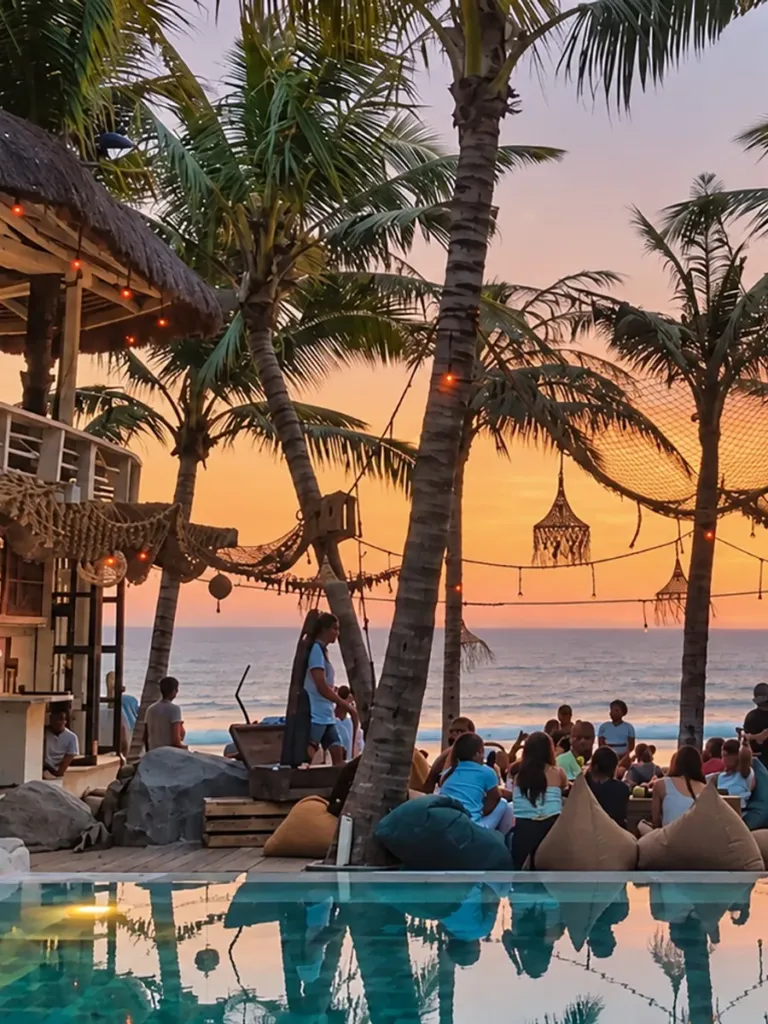
FreeThe Pererenan beach sunset is one of the quieter ones on this stretch — local fishermen pulling boats up, a handful of warungs along the dune, none of the beach-club music you get further south. Walk down by 5pm. Bring a sarong; the sand stays warm.
-
04
Tanah Lot temple
15–20 min north, entry under IDR 100,000Sea-cliff temple, the classic Bali postcard. Aim for 30 minutes before sunset, walk the cliff path past the smaller shrines, leave before the bus tours roll out, and have dinner back in Pererenan. A scooter or driver gets you there in 15–20 minutes — closer from Pererenan than from any other south-coast base.
-
05
Yoga class at Samadi or The Practice
From IDR 200,000Both yoga schools sit in Berawa, a five-minute scooter south — easier than Pererenan's smaller selection. Drop-in classes daily, all levels. Book a day ahead for popular classes (Vinyasa, Yin, Sound Healing) — they fill by mid-morning.
Is Pererenan for you?
Our opinion, not guest ratings.
Pererenan at a glance.
-
Pool villa, booked 4 months ahead
IDR 7–8M / night
On this stretch of coast a 4BR ocean-view villa runs about IDR 7–8M/night, a 5BR rice-field estate IDR 13–16M; Christmas–New Year is the first to sell out
-
Staying a month or more
IDR 30–60M / month
Across Pererenan a two-bedroom villa runs IDR 30–60M a month and a three-bedroom IDR 45–110M — from our analysis of 1,500+ live long-term listings across our own portfolio and two Bali agencies, reviewed August 2026
-
Getting here
35–50 min
35–50 min from the airport by car; Tanah Lot is 15–20 min north, Canggu 5 min south
Who Pererenan is not for.
Pererenan isn't for travellers who want a packed café scene or a lot of restaurant choice within walking distance — the strip has a handful of standouts but the depth is in Canggu, five minutes south. Late-night nightlife also lives in Canggu rather than here; Pererenan winds down around 11pm. None of this is a deal-breaker; Pererenan is the area you pick when you want the calmer alternative, not the café-dense one. If quiet rice fields with even fewer travellers are the goal, Munggu just north is more rural still. If buzzy energy is the point, Canggu starts five minutes south.
Pererenan vs neighbouring areas.
Quick guide to which neighbouring area might fit better depending on what you're after.
| Area | Vibe | Crowd | Pace |
|---|---|---|---|
| Pererenan | Quieter Canggu, rice fields | Low-key | Slower mornings |
| Canggu | Surf town, café-heavy | Younger | Constantly on |
| Umalas | Residential, leafy | Local + expat | Calm |
| Berawa | Transitional, café-dense | Café-and-laptop | Busy |
Common questions.
Is Pererenan safe?
Pererenan is among the safer areas in Bali — and Bali is one of the safer destinations in Southeast Asia. The villa pockets are quieter than Canggu, the streets see less traffic, and the area has a distinctly low-key feel. Apply common sense: don't ride a scooter at night with a phone or bag dangling, and lock valuables when you head out. The road is the only thing to take seriously — Bali traffic is its own thing if you've never ridden a scooter before, and the main road into Canggu sees the same patterns as the rest of the area. If you're not confident on a scooter, Grab and private drivers cover everything.
How do I get around in Pererenan?
Three options. Walking works for a lot of Pererenan — between villas and the beach, between the strip restaurants, along the rice-paddy paths to Berawa — better here than in most of Bali. Scooter rentals run IDR 80,000–130,000/day with helmet and are the fastest way to do everything else. Grab and Gojek work; some narrow lanes don't allow them in, so you may need to walk the last 30 metres. Private drivers are useful for day trips out — IDR 500,000–800,000/day with a car and English-speaking driver.
Best time of year to visit Pererenan?
Same dry/wet seasons as the rest of south Bali. May through September is dry season — sunny, less humid, peak. October and April are the shoulder sweet spots. November to March is wet season — short, heavy afternoon rains, lower prices, lush green rice fields. Pererenan looks particularly beautiful in February and March (the rice is at its tallest and greenest) if you don't mind the rain. Avoid late December if you dislike crowds; Christmas to New Year is the busiest two weeks of the year and rates roughly double.
Is Pererenan good for families?
Yes — Pererenan is one of the easier south-coast areas for families. The pace is slower than Canggu, the streets are quieter, the villas tend to be larger and more rural. For private villas, pool fences and childproofing kits rent locally and most villas can install them before arrival. Pererenan beach has a gentler shoreline than Canggu's main surf breaks — better for kids who want to splash about than tackle waves. Older kids enjoy the surf schools at Echo and the rice-paddy walks. We can match you to a villa already set up for families if you let us know your kids' ages.
How much should I budget?
Pererenan is a bigger-villa area — two-bedrooms are rarer than in Canggu, so plan on a three- or four-bedroom. Booked three to four months ahead, a four-bedroom ocean-view villa on this coast runs about IDR 7,000,000–8,000,000/night and a five-bedroom rice-field estate IDR 13,000,000–16,000,000; Christmas to New Year is the first to sell out, so book those weeks early. Booking direct gets our best rate — never higher than the booking sites, with no hidden fees or extra charges. Eating out is reasonable — IDR 200,000–450,000 for two at a warung, IDR 750,000–1,500,000 at the better dinner spots, around IDR 350,000 a head at most cafés including coffee. Add IDR 450,000–900,000/day for transport and incidentals. Staying a month or more is a different market — across Pererenan a two-bedroom runs IDR 30–60M a month and a three-bedroom IDR 45–110M; see what a Bali villa costs monthly, or our long-term rentals in Pererenan.
Where are the rice fields in Pererenan?
All through the village — Pererenan is still a working rice-farming area, and the paddies sit between the villa pockets rather than outside them. The best-known stretch is the rice-paddy path between Pererenan and Berawa: about 30 minutes on foot, flat, and prettiest before 9am. Plenty of villas look straight onto working fields, especially in the pocket between the strip and the Canggu border. The fields are at their greenest in February and March, just before harvest; after harvest you'll see ducks working the stubble instead. Ask us for a rice-field-view villa specifically — we know which ones actually face the paddies rather than a wall.
Can I walk to Canggu from Pererenan?
Yes, depending on which part of Pererenan you stay in. From the Canggu-border villas (around Mason) it's a 10–15 minute walk to Berawa cafés and on to the Old Man's strip in Batu Bolong. From the Pererenan-beach pocket it's about 25–30 minutes — most travellers scooter or take a Grab for that distance. The rice-paddy path between Pererenan and Berawa is the most pleasant route, especially in the morning before it gets too hot, and it gives you a sense of what this whole stretch of coast looked like before either side built up.


Find the right Pererenan villa for your stay
Talk to our local team — fastest answers via WhatsApp.