
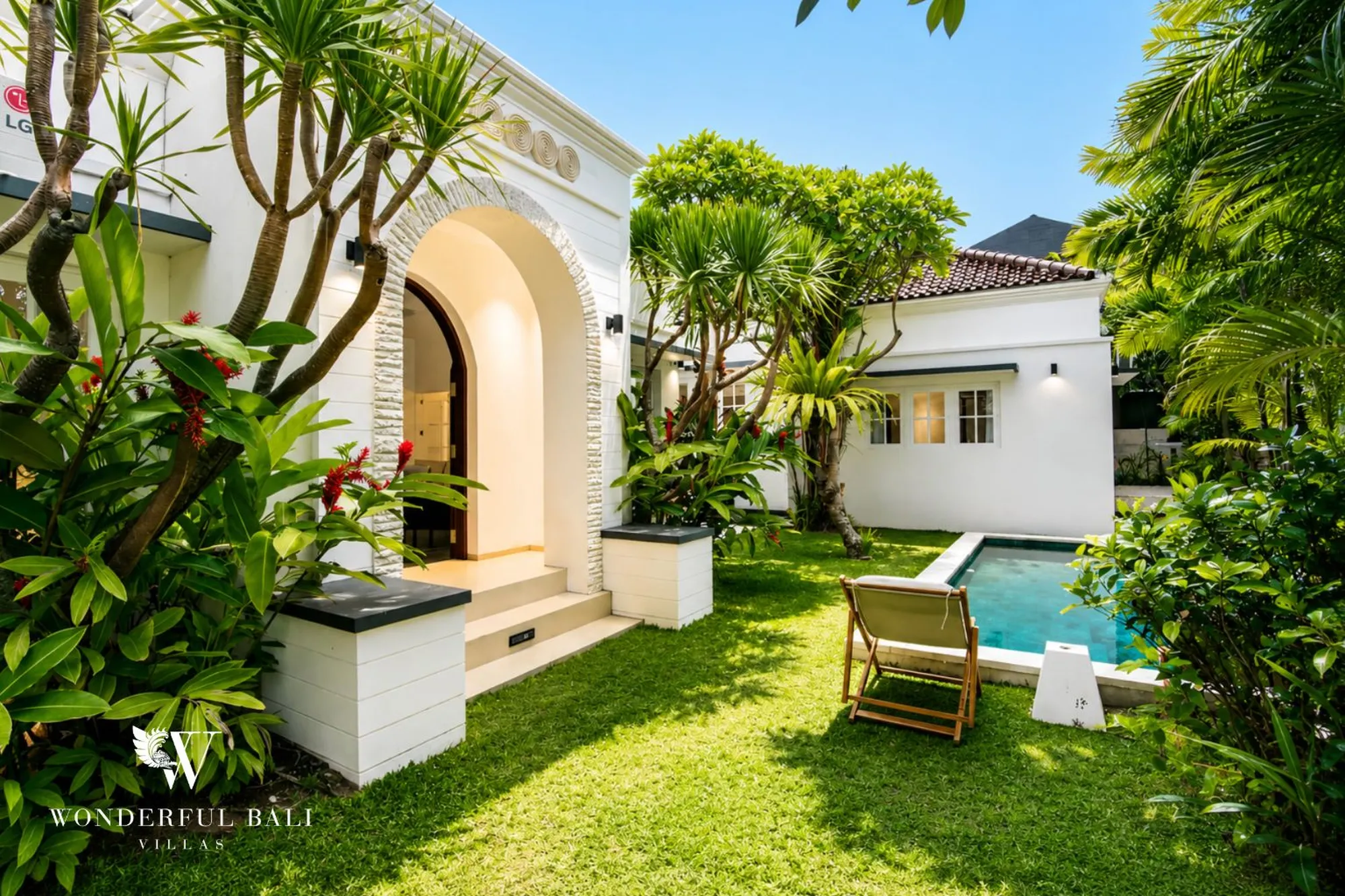
Where to live in Bali: an honest area guide for a long stay
Updated June 2026 · By Karina, Wonderful Bali Villas long-stay team — placing long-stay tenants across Bali since 2018
There’s no single best place to live in Bali — there’s the right area for how you’ll actually spend your days. A remote worker who lives in cafés wants the opposite of a family that needs a school run and a quiet garden.
We place long-stay tenants across the island every week, so we see where people thrive and where they end up moving after six months. Here’s an honest area-by-area guide, with the trade-offs nobody mentions on the listing photos.
The essentials
- No single best area — it’s the right area for how you’ll actually spend your days.
- Southwest coast (Canggu, Pererenan, Seminyak, Umalas): busiest — cafés, coworking, surf.
- Ubud: jungle, wellness, cooler and calmer; little beach.
- Sanur: flat, calm, family- and retiree-friendly, good hospitals.
- Families: pick the school first, then the area around it.
- Common mistake: choosing on a holiday vibe, not on daily life.
Bali’s long-stay geography in one minute
Bali’s long-stay areas fall into a few distinct zones. A quick orientation before the area-by-area detail:
- The southwest coast — Canggu, Pererenan, Seminyak, Umalas. The busiest, most-developed strip: cafés, coworking, surf and most of the expat scene. When people say “Canggu” they often mean this whole corridor, which now runs north through Pererenan into the newer, quieter Seseh and Cemagi — areas drawing rising long-stay interest, though villa inventory there is still thin. Umalas is the calm residential pocket inside it.
- Inland — Ubud. Bali’s interior: rice terraces, jungle, wellness, a slower pace and air slightly cooler than the coast.
- The east coast — Sanur. Calm, settled and family-oriented, on Bali’s sunrise side, with a gentle reef-protected sea.
- The southern peninsula — Uluwatu, Ungasan, Jimbaran. Clifftops, big surf and ocean views, developing fast, with Jimbaran closest to the airport.
Distances look short on a map and run long in practice — so where you live and where you go each day matter more than the kilometres between them.
How to choose your area
Four things decide this. Not the Instagram photos.
Who you’re moving with. Solo or a couple? You can chase the scene. A family? Schools come first and everything else follows (see moving with kids). Retiring? Calm and walkability beat nightlife.
How you’ll spend a normal day. If you’ll work from cafés five days a week, you want Canggu or Pererenan. If you want to swim every morning and cook at home, Sanur makes more sense. If you came for jungle and quiet, the beach areas will wear you down.
Your tolerance for traffic. Bali traffic is real and getting worse. The Canggu–Seminyak corridor can take 45 minutes to cross at 5pm for a distance Google says should take 20 minutes. Where you live and where you go each day matters more than any single area’s charm.
Your budget. Areas vary widely — and so does price within a single area.
A 3-bedroom villa in Ubud or Sanur generally costs less than the same villa in Seminyak, but Seminyak, Umalas and Uluwatu all have very pricy pockets too — the villa, its size and the exact street matter as much as the area name.
We cover real rent numbers in our monthly villa cost guide and the wider monthly picture in our cost of living guide — this page is about fit, not price.
The most common Bali area mistake
The same thing happens again and again: someone picks an area on the strength of a great one-week holiday, signs a six- or twelve-month lease, and discovers daily life is a different thing entirely.
A beach-club strip that feels electric for ten days can wear thin once your real week is school runs, grocery trips and 5pm traffic. Choose for an ordinary Tuesday, not a holiday Saturday — it’s the single biggest factor in whether an area still works after six months.
The best areas to live in Bali, at a glance
| Area | Best for | The vibe | The catch |
|---|---|---|---|
| Canggu | Remote workers, younger couples | Cafés, coworking, surf, busy | Heavy traffic; built up fast |
| Seminyak | Couples, easy first landing | Polished, walkable, dining-dense | Tight plots, touristy, pricier |
| Umalas / Kerobokan | Families, long-stayers | Quiet, residential, spacious | No walkable beach |
| Pererenan | Canggu energy, calmer base | Rice fields, relaxed, growing | Less established for daily needs |
| Ubud | Families, creatives, wellness | Jungle, cooler, slow pace | 45–60 min to the beach |
| Sanur | Families, retirees | Calm, walkable, settled | Quiet nightlife |
| Uluwatu / Ungasan | Surfers, view-seekers | Clifftops, big views, developing fast | Spread out; water still patchy |
| Jimbaran | Space-seekers, frequent flyers | Quieter, larger plots, near airport | Thin café/coworking scene |
The areas in depth
Canggu
The most “scene” area on the island — surf breaks, coworking spaces, design cafés and beach clubs, most of it a short walk or scooter ride apart. If you work remotely and want a built-in social life from day one, Canggu delivers it faster than anywhere else.
Daily life is easy: you’ll rarely drive far for a good coffee or a co-worker to sit next to. The catch is the price of that density.
Traffic on the main Berawa and Batu Bolong roads is genuinely bad from late afternoon, construction is constant, and the area is louder and more built-up every month. Best for remote workers and younger couples who want energy over calm.
Browse long-term villas in Canggu →
Seminyak / Petitenget
Polished, and one of the more walkable areas on the island, with the densest concentration of good restaurants, spas and shops.
It’s the easiest place to land if Bali is new to you — most of what you need is a short walk away, so you can find your feet before you even sort a scooter. The crowd skews slightly older and more settled than Canggu.
The trade-offs: plots are tighter here, so big gardens and standalone villas are rarer, it stays busy and touristy year-round, and you pay a premium for the convenience. Best for couples who prioritise dining and an easy first few months.
Browse long-term villas in Seminyak →
Umalas / Kerobokan
The quiet residential corridor between Seminyak and Canggu — a practical, family-friendly middle ground.
The two names aren’t quite one place: Umalas itself is the long-established expat enclave, villa-dense and on bigger plots, while Kerobokan runs more local, cheaper and is still developing — worth checking which one a listing really sits in.
Either way you get space, calm lanes and real gardens, with good cafés nearby and both the Canggu and Seminyak scenes around 15 minutes away. Several international schools are within reach, which is why long-stay families gravitate here.
The one real downside: no walkable beach, so you’ll need a scooter or driver for daily life. Best for families and long-stayers who want space and calm without being remote.
Browse long-term villas in Umalas →
Pererenan
The calmer side of Canggu — rice fields, roads still calmer than central Canggu, beach access without the crush. It has Canggu’s energy on tap a short ride away, but a more relaxed base to come home to.
The café and restaurant scene is growing quickly but isn’t fully established, so you’ll still drive into Canggu for variety, and building work is everywhere as the area develops. Best for people who want Canggu within reach but don’t want to live inside it.
Browse long-term villas in Pererenan →
Ubud
Bali’s interior — rice terraces, jungle, air slightly cooler than the coast, yoga, a slower and more deliberate pace of life. It draws creatives, wellness-focused long-stayers, and families who would rather their kids grow up around nature than beach clubs (the Green School community is a big part of that).
The trade-offs are real: it’s 45–60 minutes to the nearest beach, noticeably damper in wet season, and the central area is heavily touristed. Best for families and creatives who prefer jungle to coastline.
Browse long-term villas in Ubud →
Sanur
The most settled expat-family town in Bali — calm, walkable and safe, with a real beach promenade you can cycle along and a gentle, reef-protected sea on Bali’s sunrise side, genuinely good for swimming with kids. It has family restaurants, good healthcare nearby, and Bali Island School.
Of all the areas, Sanur feels the most like a place you live rather than a place you holiday. The trade-off is a quiet nightlife and dining scene — some people find it sleepy, others find that’s exactly the point. Best for families and retirees who want calm and routine.
Browse long-term villas in Sanur →
Uluwatu / Ungasan
The dramatic south — clifftops, world-class surf and big ocean views — and the fastest-changing area on the island. A wave of expats bought land here through the Covid years, and it has been developing at speed ever since: new villas, cafés and restaurants, with prices in the sought-after pockets climbing hard.
Uluwatu is shaping into something like an upper-end Canggu. Daily life has caught up too — many pockets are now genuinely convenient, though it stays more spread out than the southwest, so you’ll drive more.
Two honest caveats: water is still patchy across the Bukit, with many villas on delivered water rather than reliable mains, so always check how a place is supplied; and the building pace means a quiet green lane can change fast — though some streets still keep their big old trees, and that’s a real part of the charm.
Best for surfers and view-seekers who want drama and space, and don’t mind a fast-moving frontier.
Browse long-term villas on the Bukit →
Jimbaran
A former fishing town that’s developing fast — some bigger projects going up, but plenty of old-style local character still in the everyday streets. It’s the closest area to the airport, handy if you fly often.
The fish market still runs a long stretch of the beach, busy with locals, visitors and residents alike. You get larger plots for the money and a quieter pace than the Canggu/Seminyak corridor.
The café and coworking scene is thin, so you’ll commute north for “scene.” Best for families wanting space and value, and frequent travellers.
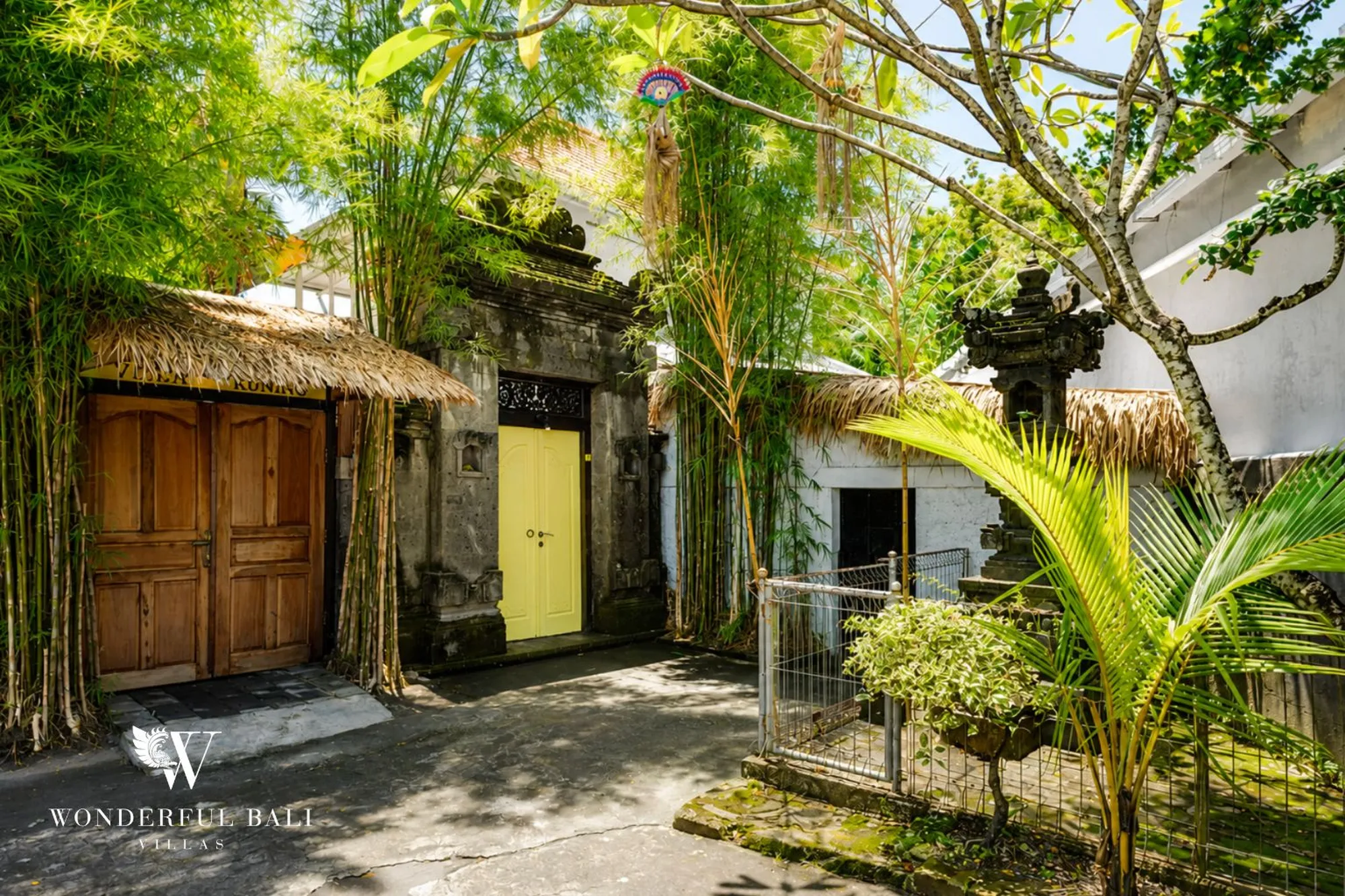
These area notes are written by the Wonderful Bali Villas long-stay team, from placing tenants across Canggu, Ubud, Sanur, Umalas and the surrounding areas every week.
Browse long-term villas in Jimbaran and across the Bukit →
Canggu or Ubud? A side-by-side
It’s the comparison we’re asked for most — and the two suit genuinely different lives.
| Choose Canggu if… | Choose Ubud if… |
|---|---|
| You want surf, cafés and a ready-made social life | You want jungle, quiet and a slower pace |
| You’ll work from cafés and coworking spaces | You’ll work mostly from home |
| You want the beach a few minutes away | You don’t mind being 45–60 minutes inland |
| Traffic and crowds don’t put you off | You’d rather trade the buzz for calm and cooler air |
| You’re solo or a younger couple chasing energy | You’re a family or creative drawn to nature |
Moving to Bali with kids: areas and schools
If you’re moving as a family, this is the section that matters most — and the order is the reverse of what most people expect. You don’t pick an area and then find a school. You pick the school, then live near it. Bali traffic makes a long school run miserable, so families build their whole base around the campus.
That puts most expat families in one of three school clusters:
Canggu and the west coast — the biggest and fastest-growing school area. Canggu Community School (Early Years to Year 13, IGCSE then IB Diploma) is the anchor, with several other international and Montessori schools across the area.
Many school families settle in Umalas, Bali’s long-established expat community, drawn by its supply of family villas on bigger plots at still-reasonable prices — everything has climbed since Covid, but it holds more space for the money than the coast.
Others base in Canggu or Berawa for proximity, and the corridor keeps widening — Pererenan, Tumbak Bayuh, Seseh and Cemagi are all developing for family life.
Sanur — anchored by Bali Island School, an IB World School running the full Primary, Middle and Diploma programmes. Sanur’s calm, walkable setup is a big part of why families who choose this school rarely leave the area.
Ubud — anchored by Green School Bali, the well-known sustainability-focused campus near Ubud. Families here are usually drawn to both the school’s ethos and the jungle lifestyle around it.
Budget honestly for school costs. All-in — tuition plus registration, uniforms, transport and lunch — international schooling in Bali runs roughly USD 8,000–28,000 per child per year, depending heavily on the school and the year group. And start early: most schools want applications 6–9 months ahead, though mid-year places do open up.
Our full guide to international schools in Bali covers curriculum, fees and enrolment, school by school.
If you’re moving for a fixed term like a year, a family villa near your chosen school on a long lease is almost always the right setup — see how renting long-term works.
Quick picks by situation
The same areas, sorted by who you are:
| If you’re… | Look at | Why |
|---|---|---|
| A remote worker or digital nomad | Canggu, Pererenan, Uluwatu, Umalas | Nomads live all over — it comes down to your free time. Canggu and Pererenan for café-and-coworking life and nightlife; Uluwatu for early-morning surf and big views; Umalas for a quiet base a short ride from the scene. |
| A couple | Seminyak, Canggu, Ubud, Uluwatu | Seminyak for dining and walkability; Canggu for energy; Ubud for nature over nightlife; Uluwatu for clifftop space and surf. |
| A family | Sanur, Ubud, Canggu, Umalas | Decided by your school — see moving with kids above. |
| Retiring | Sanur, then Ubud or Umalas | Sanur for calm, walkability and healthcare; Ubud or Umalas as quieter alternatives. |
| On a tighter budget | Ubud, Sanur, Jimbaran | The most space and calm for the money. |
Once you’ve chosen your area
Picking the area is the hard part. Once you know roughly where you want to be, a few things help.
What it actually costs — our monthly villa rental cost guide breaks down real ranges by area and bedroom count, plus the bills nobody lists.
How renting works — our guide to renting a villa long-term covers leases, deposits, what to check before you sign, and the visa side.
Or skip the research — tell us your area, dates, budget and who’s coming, and we’ll send a shortlist that fits.
Next steps
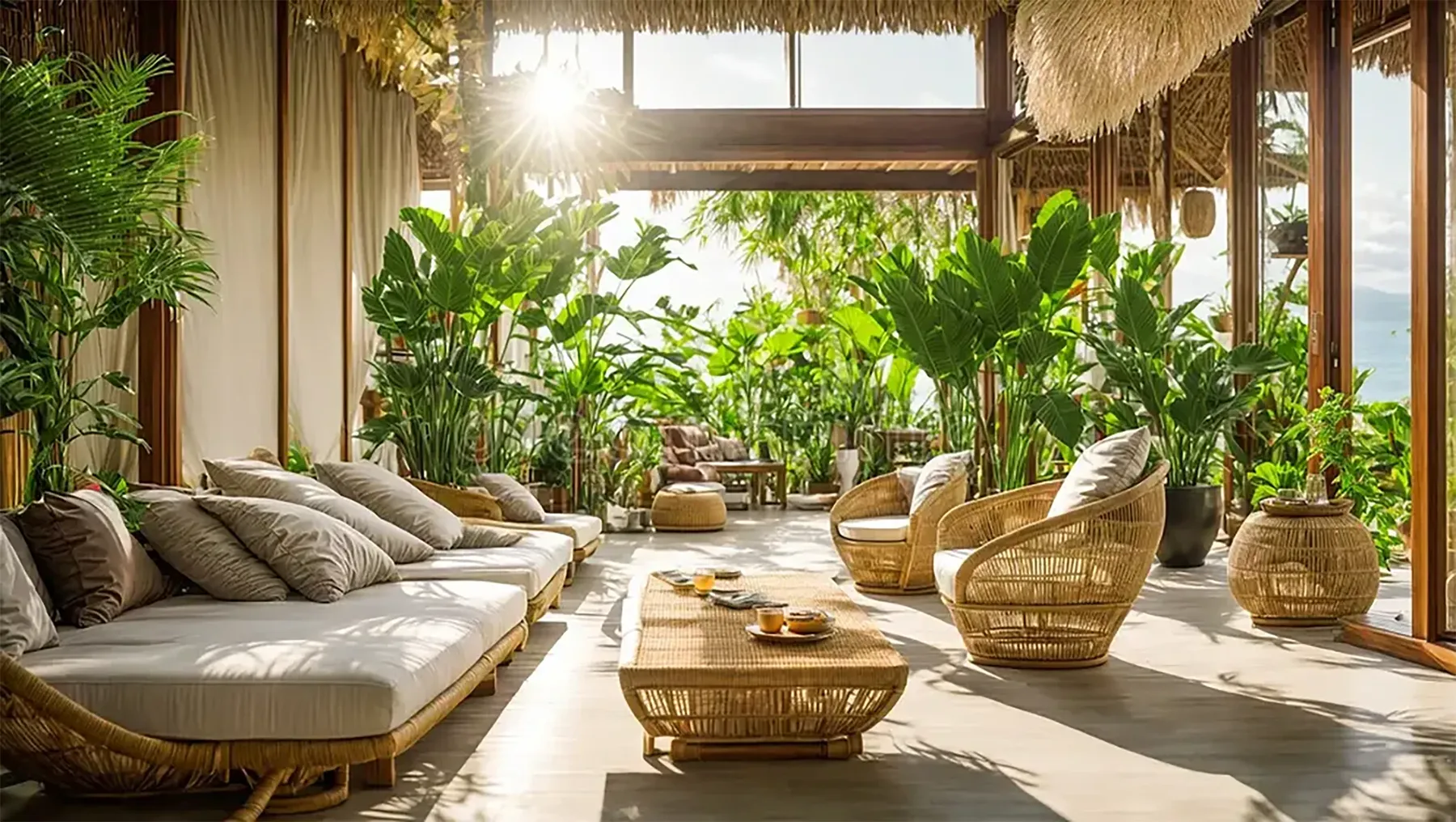 Browse long-term rentalsYearly-lease villas across the island.
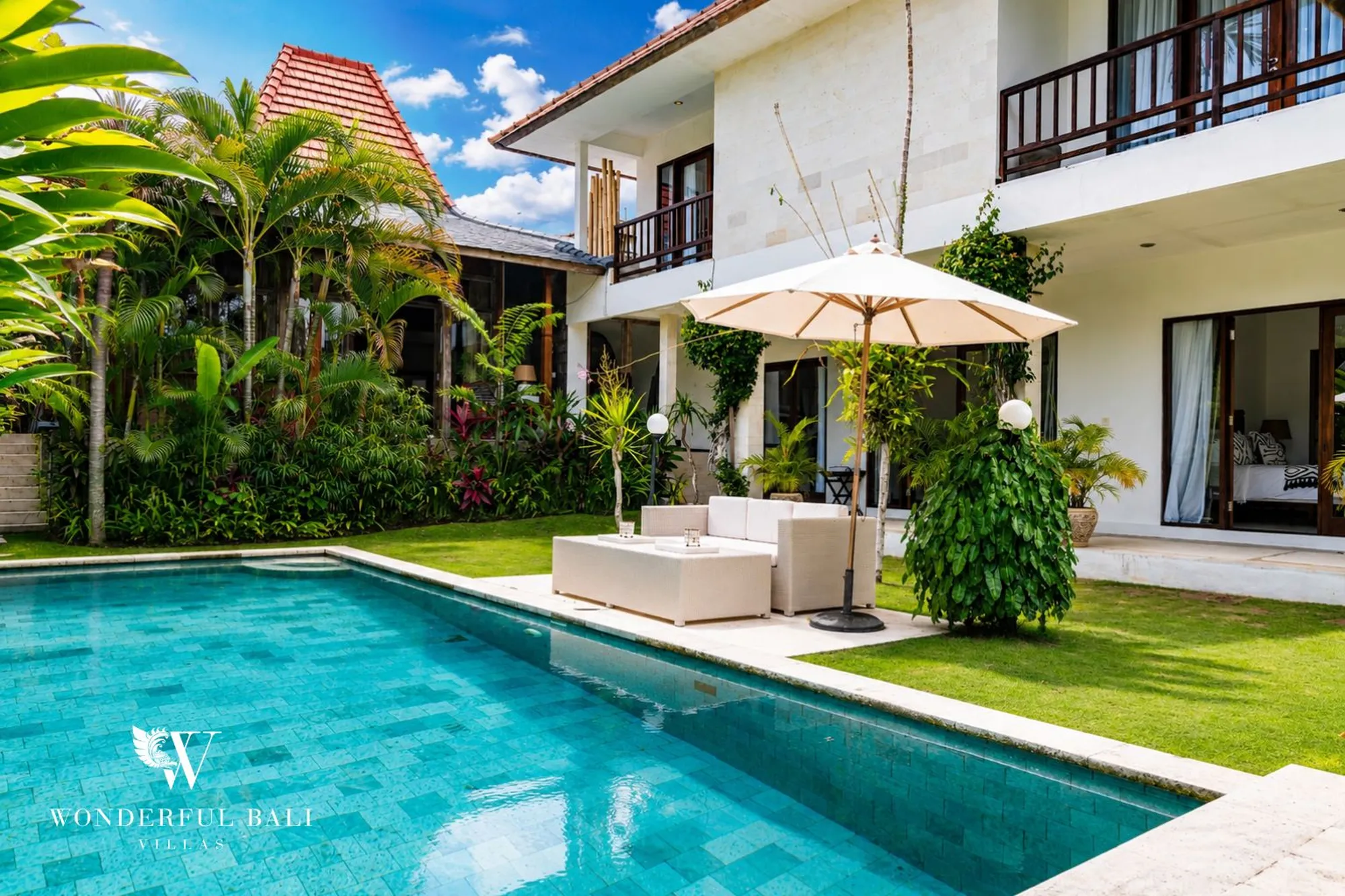 Monthly villa costsWhat a villa rents for, by area.
 Cost of living in BaliWhat life actually costs each month.
 Moving to Bali guideEverything to sort before you arrive.
Prefer to talk? Message us on WhatsApp →
Common questions about where to live in Bali
01What is the best area to live in Bali?
There isn’t one — it depends on who you’re moving with and how you’ll spend your days. Remote workers are spread across the island — Canggu and Pererenan for the café scene, Uluwatu for surf; families cluster near the international schools in the Canggu area, Sanur or Ubud; retirees favour Sanur; anyone wanting space and a calmer pace looks at Umalas or Jimbaran.
02Where do families with children live in Bali?
Families cluster around the international schools: the Canggu area (Canggu, Berawa, Umalas) for Canggu Community School and the other Canggu-area schools, Sanur for Bali Island School, and Ubud for Green School. Most families pick the school first and then find a villa within a short commute.
03Where do digital nomads live in Bali?
Honestly, all over — nomads are spread right across the island, and the deciding factor is how you want to spend your free time. Canggu and Pererenan are the default for café-and-coworking life and a ready-made social scene; Uluwatu draws those who want early-morning surf; Umalas, Sanur or Ubud suit anyone after a quieter base. There is no single nomad area anymore.
04Is it better to live in Canggu or Ubud?
Canggu if you want beach, surf, cafés and an active social life, and can tolerate traffic and crowds. Ubud if you want nature, cooler air, a slower pace and don’t mind being an hour from the coast. They suit genuinely different people.
05Where do retirees live in Bali?
Mostly Sanur — it’s calm, walkable, safe, has good healthcare nearby and gentle swimming water. Ubud and Umalas are quieter alternatives for retirees who want more nature or more space.
06Do I need a scooter or car to live in Bali?
Not necessarily. A scooter is the cheapest, most flexible way to get around and most long-stayers end up with one — but Gojek and Grab, the ride-hailing apps, are cheap and cover the populated areas well, so plenty of people skip it. A scooter or a driver matters most in the spread-out areas like Uluwatu and Jimbaran; in and around the busier southwest you can manage on ride-hailing alone.
07How long does it take to get between Bali’s areas?
Longer than the map suggests. The Canggu–Seminyak corridor can take 45 minutes at peak times; Ubud is about an hour from the southern beaches. Always plan your daily routes around traffic, not distance.
08Which area of Bali is cheapest to live in?
Ubud, Sanur and Jimbaran generally offer the most space and calm for the money, with Seminyak the priciest. See our monthly villa cost guide for real ranges by area.