
Best time to visit Bali: the right month for your trip
Updated July 2026 · By Karina, Wonderful Bali Villas — arranging holiday villa stays across Bali since 2018
The best time to visit Bali is May, June and September — the sweet spot of dry-season weather, lower prices and thinner crowds, just before and after the July–August peak. But Bali is a year-round destination, and the “right” month depends on what you’re coming for — surf, diving, a honeymoon, a family holiday, or simply the lowest prices and an empty beach. This is an honest, month-by-month guide from a team that lives here and has hosted more than 1,000 guests across Bali since 2018 — what the weather is actually like, when prices spike, when the island gets busy, and which festival dates to plan around in 2026.
Bali at a glance — the quickest answer
- Best overall (weather + value + fewer crowds): May, June, September.
- Best weather, highest prices and crowds: July, August.
- Cheapest + greenest: January–February (green season — short afternoon showers, plenty of sun).
- Best for surf: dry season (April–October) on the west coast.
- Avoid for arrivals: Nyepi, the Day of Silence — 19 March 2026, the whole island shuts for 24 hours.
Bali’s two seasons (the only weather rule you need)
Bali has no spring, summer, autumn or winter — just two seasons, and the temperature barely moves all year (a steady 26–32°C, humid).
Dry season — April to October. Sunny, lower humidity, calm seas on the east and clean surf on the west. In July and August the south-east trade winds blow up from the Australian winter, giving Bali a fresher, breezier feel — cooler nights and clear blue skies. This is peak tourist season, busiest and priciest in July–August and again over Christmas and New Year.
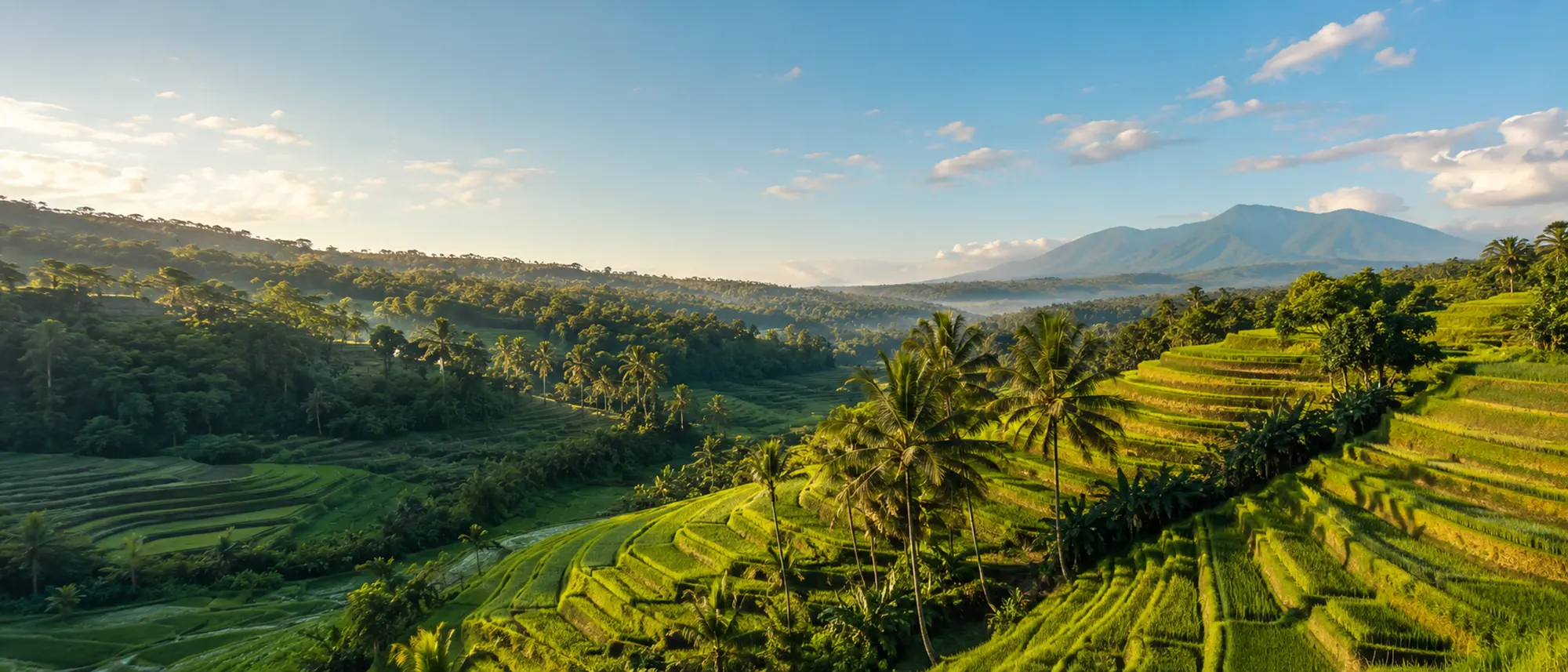
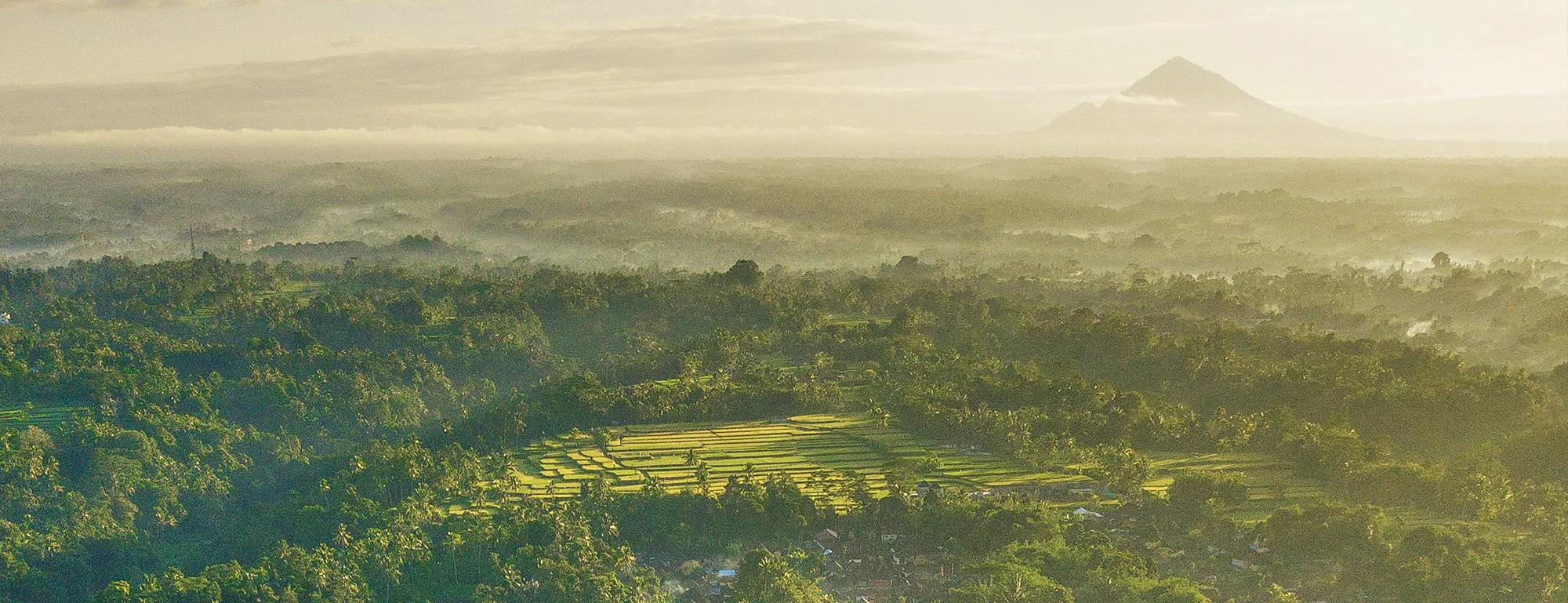
Green (wet) season — November to March. Don’t imagine months of endless rain. More often, Bali sees intense tropical showers that pass through, leaving plenty of sunshine in between. Weather is less predictable than during the dry season and occasional fully rainy days do happen, particularly in January. The trade-off is a greener, quieter island, lower prices and a more relaxed pace, with rice fields, jungle and waterfalls looking their best.
The shoulders either side of peak — May, June, September and October — often offer dry-season weather with fewer crowds and better value. That’s why they’re the sweet spot (October has been getting busier, so book a little earlier).
Bali month by month
Same warm temperatures all year; what changes is the rain, the crowds and the price. Here’s the quick read on every month.
| Month | Season | Weather | Crowds & price | In short |
|---|---|---|---|---|
| January | Wet — most rain | Showers with sun between, very lush | Generally the lowest crowds & prices | Brilliant value and quiet; plan mornings outdoors and enjoy the green |
| February | Wet, easing | Green and quiet | Low | Chinese New Year brings a short regional bump |
| March | Wet, winding down | Improving | Low | Nyepi 19 Mar — airport and island shut for 24h |
| April | Dry season begins | Improving, still green | Great value, uncrowded | One of the most underrated months |
| May | Dry — sweet spot | Reliably dry, warm, green | Ahead of the crowds | Sweet spot |
| June | Dry — sweet spot | Classic Bali weather | Building, not yet peak | Galungan 17 & Kuningan 27 — island stays open |
| July | Dry — peak | Breezy, blue skies, cooler nights | Busiest; villas +40–60% | Book well ahead |
| August | Dry — peak | Driest month; breezy, blue skies | Maximum crowds & prices | Peak mola mola dive season; Independence Day 17 Aug |
| September | Dry — sweet spot | Dry, warm, calm seas | Crowds thinning fast | Arguably the best month of all |
| October | Dry, turning | Mostly dry | Often good value; can get busier now | A safe bet before the rains return |
| November | Wet season begins | Showers build, dry spells | Quieter, cheaper | Plenty of dry spells between showers |
| December | Wet | Green | Quiet — except the Xmas/NY spike | Book the Xmas–NY fortnight months ahead |
Found your month?
See which villas are free then — book direct, no fees, instant confirmation. Browse our villas → · Prefer to ask first? Message us on WhatsApp.
Best time to visit Bali by area
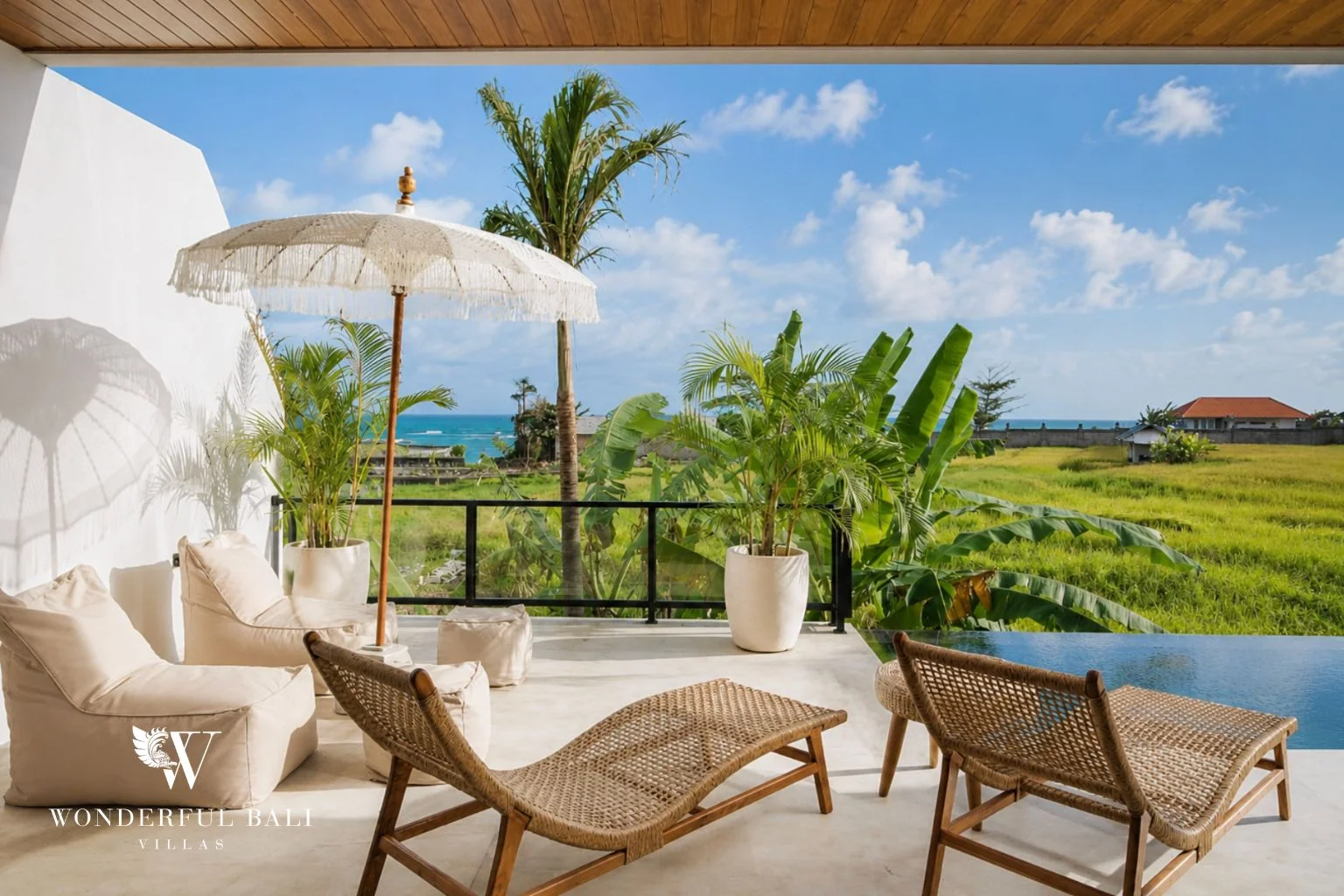
Bali isn’t one climate. The south and the Bukit are drier, the centre and north greener and wetter — so the best month shifts a little depending on where you base yourself.
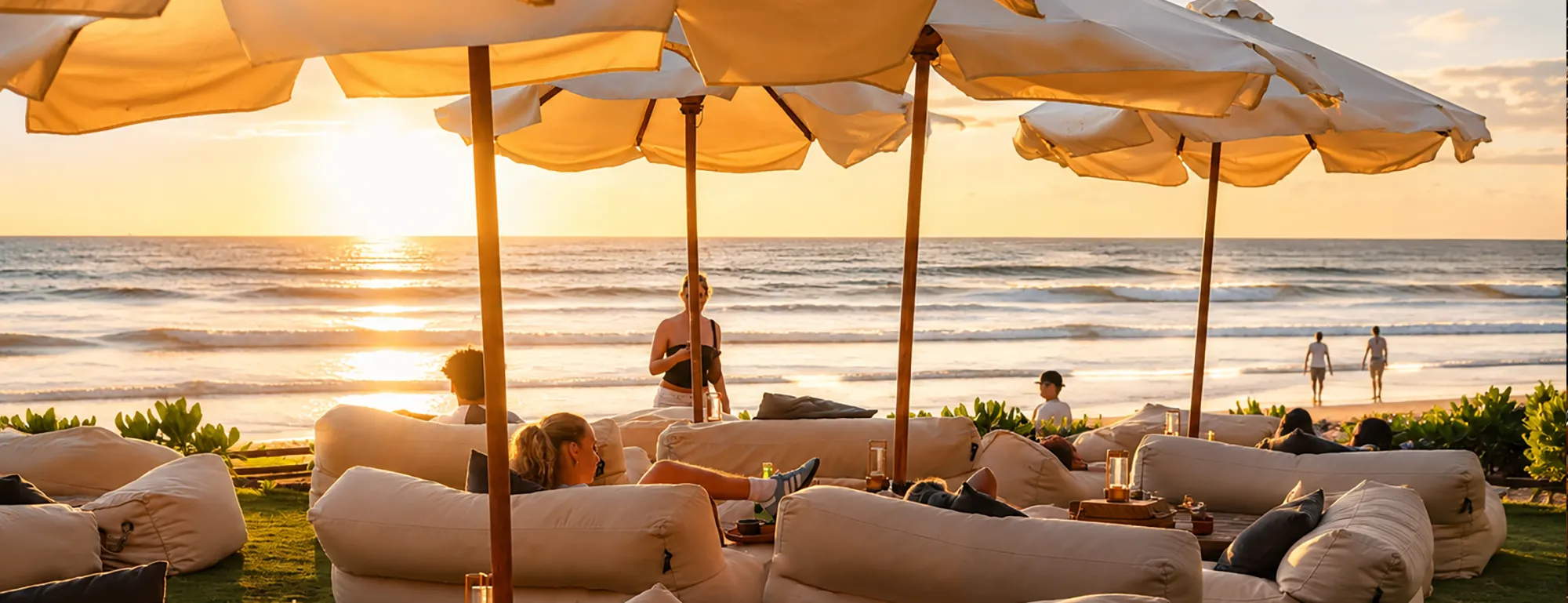
- Canggu & the west coast: surf country — the dry season (April–October) brings the cleanest swell and the liveliest scene, though it stays busy much of the year. Villas in Canggu.
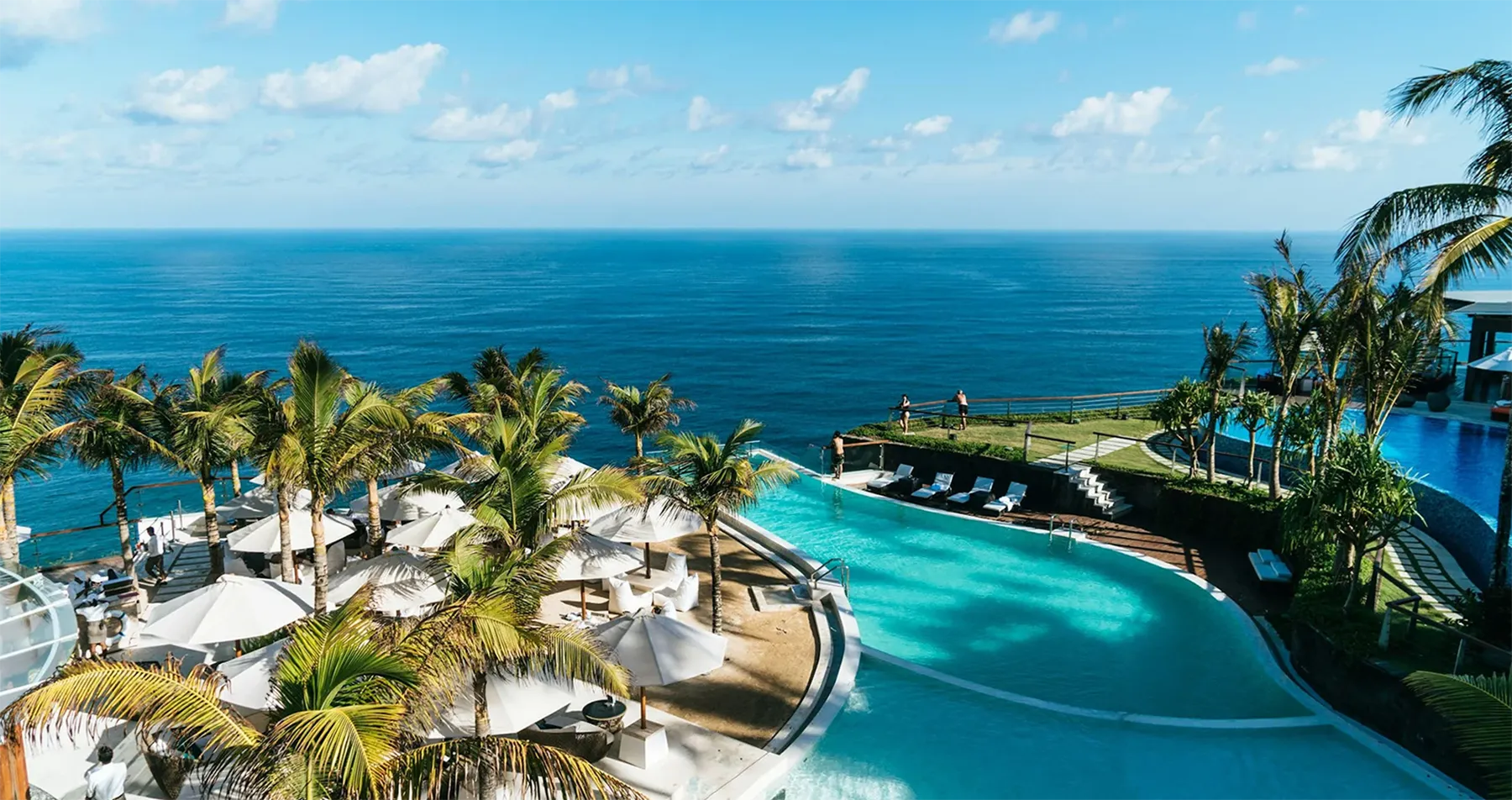
- Uluwatu & the Bukit: the driest corner of the island, sitting in a rain shadow, so the clifftop sunsets and reef breaks hold up well even at the season’s edges; April–October is prime. Villas in Uluwatu.
- Ubud: inland, cooler and greener, with more rain than the coast — the dry season (May–September) is best for rice-terrace walks and temples, while the green season is lush but wetter. Villas in Ubud.
- Sanur: the calm east coast catches the sunrise and sits sheltered from the surf swell, so it stays pleasant much of the year, including the shoulder and green-season months. (Area page coming as we add villas here.)
- Nusa Dua: sheltered, manicured resort beaches in the south — calm and swimmable, best in the dry season but easy year-round. (Area page coming as we add villas here.)
Best time to visit Bali for surf, diving, honeymoons and families
- Surfers: dry season (April–October) for the famous west-coast breaks (Canggu, Uluwatu); the wet season suits the quieter east coast.
- Families: dry-season shoulders (May–June, September) — good weather, calmer prices and swimmable seas in Sanur and Nusa Dua. Browse our family villas.
- Honeymooners / quiet luxury: May–June or September–October — great weather without the peak crowds. See our luxury villas.
- Divers: the calm-water diving starts as early as May–June — great visibility at Amed, Tulamben (the famous USAT Liberty wreck) and Menjangan Island in Bali’s northwest, doable as a long day trip from the south or a relaxed overnight. For the headline act, the giant mola mola (oceanic sunfish) appears around Nusa Penida and Nusa Lembongan from July–October, peaking August–September when cold upwelling brings them up; Crystal Bay is one of the world’s most reliable spots. The mola dive is advanced (deep and cold), but a bucket-list one.
- Digital nomads / long stays: the green season is cheaper and quieter for settling in; the dry season for the social peak.
When we’d visit — the team’s picks
We live here, so here’s the honest version: the month we’d each choose for a given kind of trip.
| If you’re planning… | We’d go in… |
|---|---|
| Your first Bali trip | April–June |
| A honeymoon | September |
| A dive trip (to see the mola mola) | August |
| The cheapest trip | February |
| A family holiday | Any time of year |
| Fewest crowds & the most “real” Bali | Green season (Jan–Feb) |
Surfing? Any month — the dry season (April–October) brings the cleanest, most consistent swell to the west-coast breaks, while the wet season often favours the east coast.
2026 dates worth planning around
- Nyepi (Balinese Day of Silence) — 19 March 2026. The airport closes, no flights in or out, and everyone (visitors included) stays in for 24 hours with lights kept low. Beautiful if you understand it, a shock if you don’t — don’t schedule arrival or departure on this day. The Ogoh-Ogoh parades the evening before (18 March) are worth planning around.
- Galungan — 17 June 2026 and Kuningan — 27 June 2026. Bali’s most important festival cycle; the island stays open and welcoming, with streets lined by tall decorated bamboo penjor poles. A wonderful, very photogenic time to visit respectfully. (2026 has only one Galungan, unusually.)
- Christmas & New Year (mid-December to early January). The green season’s exception. Bali comes alive with festive events, beach club celebrations, rooftop parties and New Year’s fireworks, attracting visitors from around the world. It’s one of the island’s busiest and most expensive periods, with villas often booking out months in advance.
- Indonesian Independence Day — 17 August 2026. While not a major tourist event, Indonesia’s Independence Day brings a festive atmosphere to many villages and neighbourhoods across Bali. Expect flags, friendly competitions, community celebrations and a glimpse of everyday local life beyond the usual visitor experience.
Why these festival dates change every year
Bali runs on two traditional calendars, and neither lines up with the Western (Gregorian) calendar — so the festival dates drift each year. That’s why Nyepi and Galungan land on different dates annually, and why they move independently of each other.
| Festival | Calendar & why it moves |
|---|---|
| Nyepi | Follows the Saka calendar — lunar, about the same length as a Western year (with an occasional leap month). Nyepi is the Saka new year, the day after the new moon of the ninth month, so it always falls somewhere in March. |
| Galungan & Kuningan | Follow the Pawukon calendar — a 210-day cycle that doesn’t track years or the moon at all. Galungan repeats every 210 days, so it usually occurs twice in a Western year and shifts earlier each time. Kuningan is always 10 days after Galungan. |
Because 210 days doesn’t divide evenly into 365, some years get two Galungans and some get one. 2026 has only one (17 June); the next falls in January 2027.
Planning a 2027 trip? The movable Balinese dates are: Nyepi — 8 March 2027; Galungan — 13 January and 11 August 2027 (with Kuningan ten days after each, on 23 January and 21 August); and Indonesian Independence Day on 17 August. Everything else on this page — the weather, the seasons, the crowd and price patterns — stays the same year to year; only these festival dates move.
Got your dates? Now pick where to stay
This guide is about when to come. Once your month is settled, the next question is where on the island to base yourself — surfers, families and first-timers all want different areas, and on an island this size the right base keeps the things you came for close. For that, see our companion guide on where to stay in Bali, or browse our villas direct.
Best time to visit Bali — common questions
01What is the best month to visit Bali?
May, June and September. You get dry-season weather — warm, sunny, calm seas — without the July–August peak in crowds and prices.
02What is the cheapest time to visit Bali?
The green (wet) season, roughly November to March, excluding the Christmas/New-Year fortnight. Villas and hotels discount heavily, and January–February are the quietest, lowest-priced weeks.
03What is the rainy season in Bali like?
November to March, and it’s better than its reputation. It rarely rains all day — expect heavy tropical showers with plenty of sun between them, often-clear mornings, and the occasional full wet day. The trade-off is a greener, quieter, cheaper island with far fewer tourists. Plenty of regulars rate it their favourite time in Bali.
04When is peak season in Bali?
July and August, plus the Christmas–New-Year fortnight. Expect the best weather but the highest prices (often 40–60% above shoulder season) and the busiest beaches.
05When is Nyepi in 2026, and how does it affect my trip?
Nyepi, the Day of Silence, falls on 19 March 2026. The airport closes and the entire island shuts down for 24 hours — no flights, no going outside. Plan arrivals and departures around it.
06Is it worth visiting Bali in the wet season?
Yes, if you’re flexible. You trade some afternoon rain for big savings, green landscapes and far fewer people — and you can plan activities for the usually-clear mornings.
07Is Bali too hot in April?
No. April is warm and humid — around 26–32°C, much like the rest of the year — but it marks the start of the dry season, so sunshine rises and rain falls away without peak-season prices. It’s one of the best-value months to visit.
08Which side of Bali has the best weather?
The south — Seminyak, Canggu, Uluwatu, Sanur and Nusa Dua — is generally drier than the middle of the island, and the Bukit peninsula around Uluwatu is the driest corner of all. Ubud and the inland highlands catch noticeably more rain, especially in the green (wet) season.
This guide is based on first-hand experience hosting more than 1,000 guests across Bali since 2018, cross-checked against Indonesian Meteorological Agency (BMKG) seasonal climate data. Festival dates are verified against the Balinese Saka and Pawukon calendars each year.
Next steps
 Where to stay in BaliThe right area for your trip, by traveller type.
 Browse our villasHand-picked private villas, direct-bookable, no fees.
 Villas in CangguSurf, cafés and the nomad scene.
 Villas in UbudRice fields, jungle and slow mornings.
Know when you’re coming but not where to stay? Tell us your dates on WhatsApp →